Allstate Protection Plans: Scoping a 350-Hour Integration
Overview
Feature not released. My designs were completed and approved, but the project was deprioritized before development. This case study covers discovery, constraints, wireframes, and final designs.
Homemakers ended its partnership with Guardsman Furniture Protection to transition to Allstate Protection Plans, leaving customers unable to purchase protection coverage. I was tasked with leading the Allstate integration across the ecommerce experience while maintaining clarity, trust, and conversion at key decision points throughout the journey.
Adding protection without slowing down add-to-cart
I designed a streamlined protection plan experience that integrated Allstate into the existing purchase journey without disrupting checkout. I simplified decision points, and introduced trusted Allstate branding to help customers understand their coverage and confidently add protection to their purchases.
Timeline
November 2024 – March 2025
Role
UX/UI Designer
Contributions
UX Design
UI Design
Collaborators
Analytics
Merchandising
Sales
IT & Systems
Developers
Stakeholders
RESEARCH & DISCOVERY
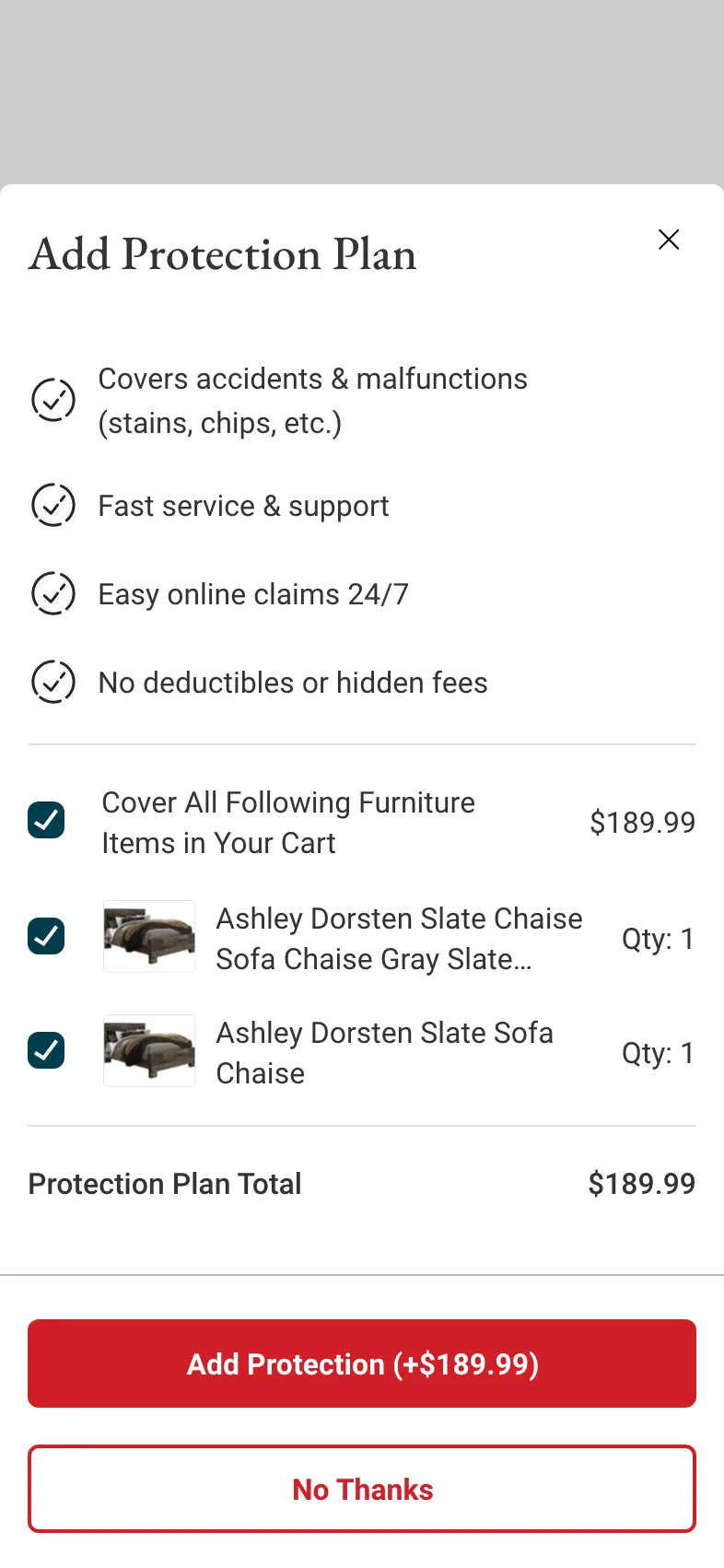
Allstate required a modal
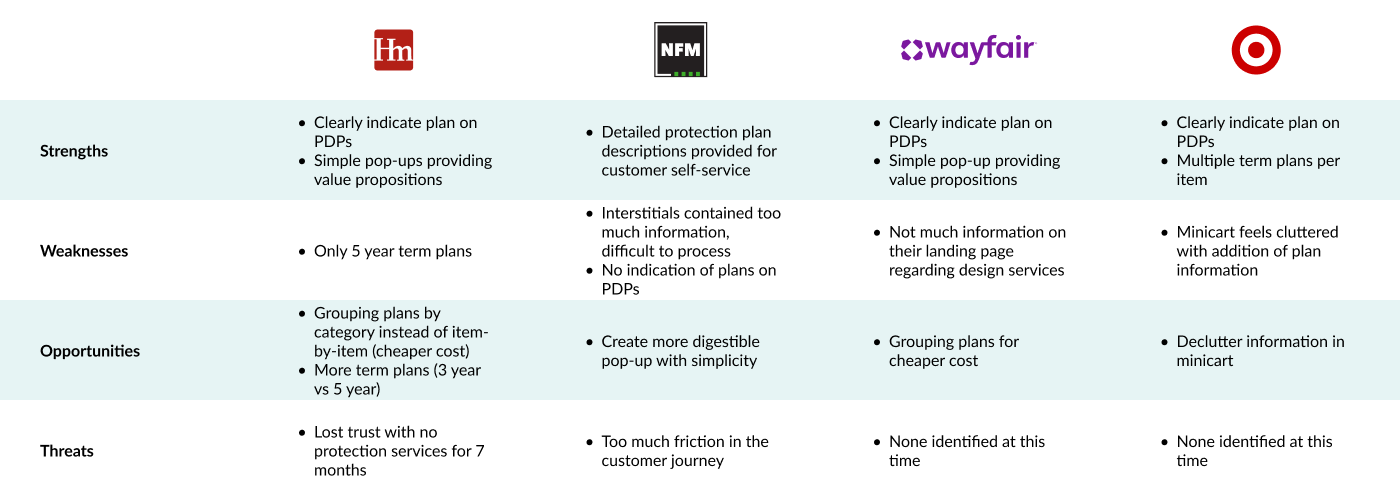
The transition introduced new constraints from Allstate to include required interstitial modals at add-to-cart. I analyzed competitor experiences and Homemakers’ existing flow to identify sources of friction, finding that poorly timed interruptions, complex coverage options, and weak value communication increased customer hesitation which guided my design approach.
HOW MIGHT WE
How might we introduce protection plans that minimize disruptions, simplifies decision-making, and clearly states value?
IDEATION & ITERATION
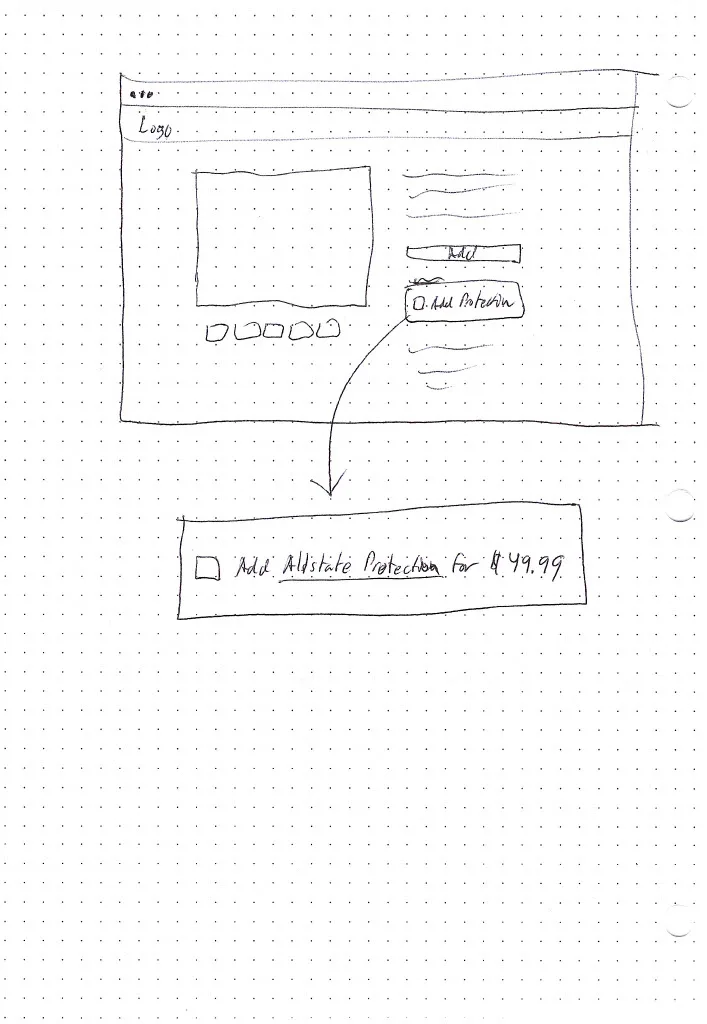
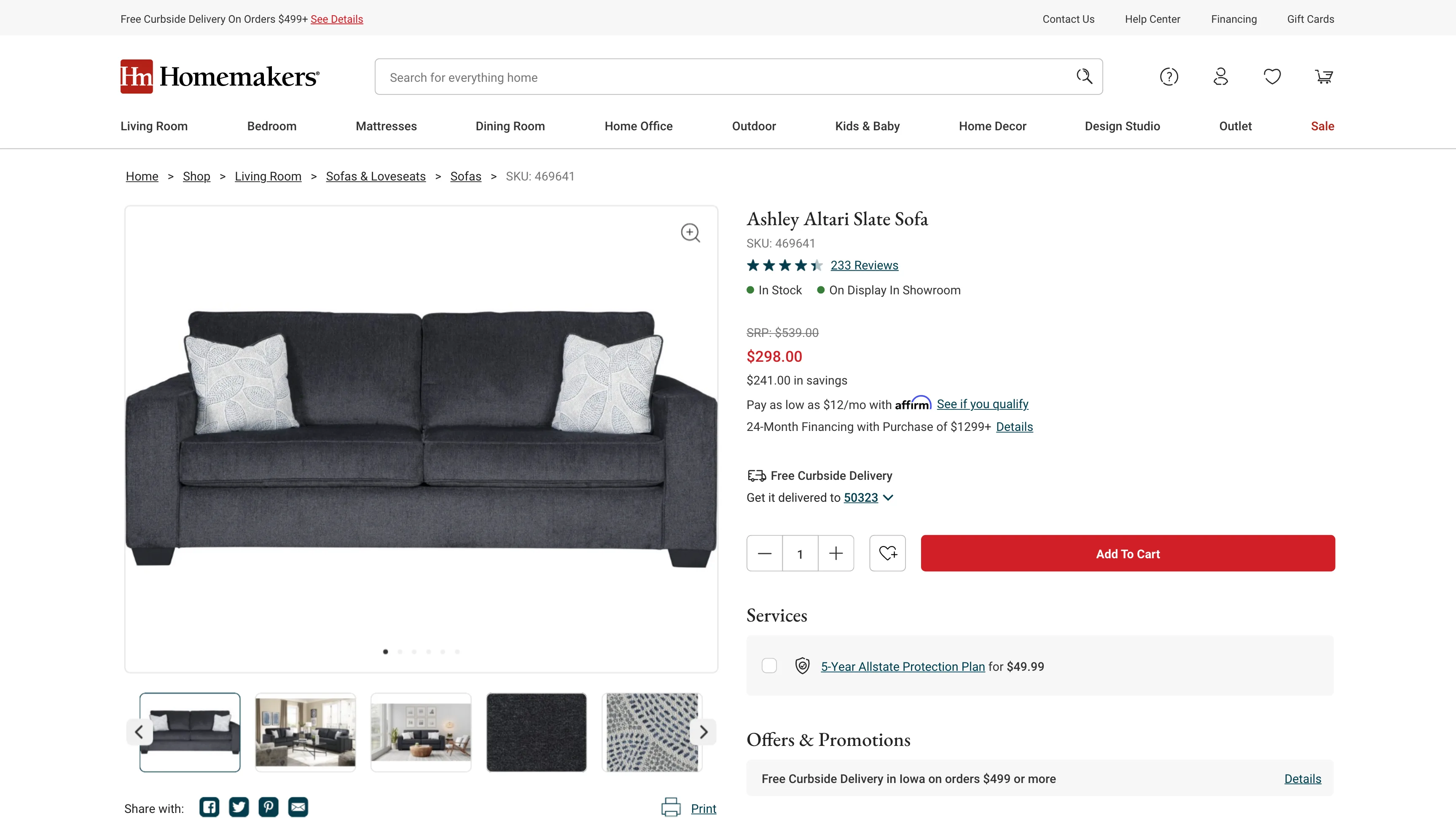
Keeping Guardsman's placement so returning shoppers weren't lost
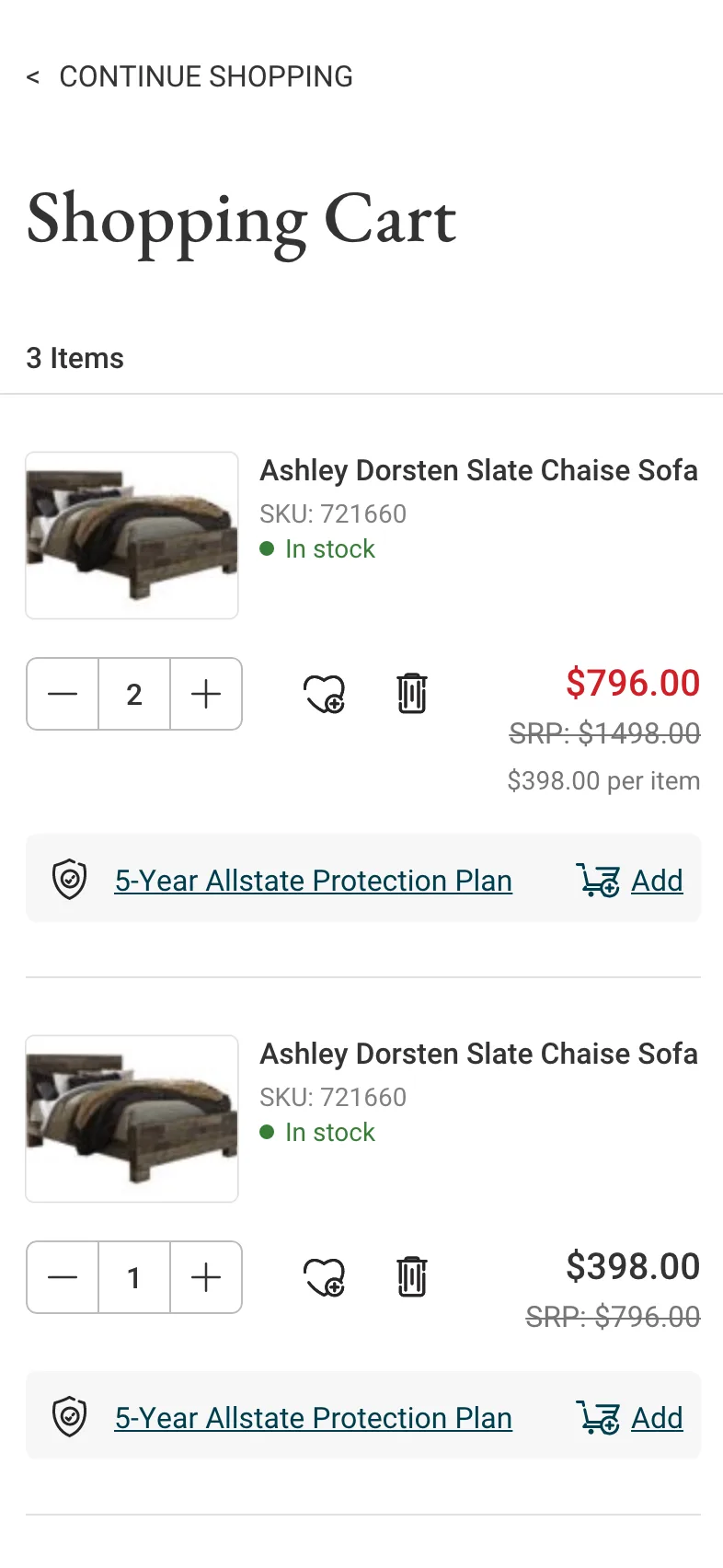
Leveraging existing data from Guardsman, I maintained familiar placement patterns for protection plans to reduce disruption. Instead of reworking the entire experience, I focused on optimizing the user journey by reducing friction and improving clarity at key decision points.
I capped the modal at two declines per session
Have you ever tried adding a product to your cart, declined the associated protection plan modal, added another product only to be hit with another modal?
Forced modal interruptions disrupt purchase momentum. To avoid repeated disruption, I decided to limit exposure to the first two add-to-cart interactions if the user declined consecutively, then suppressed them for the remainder of the session while still allowing users to add plans through user-initiated actions.
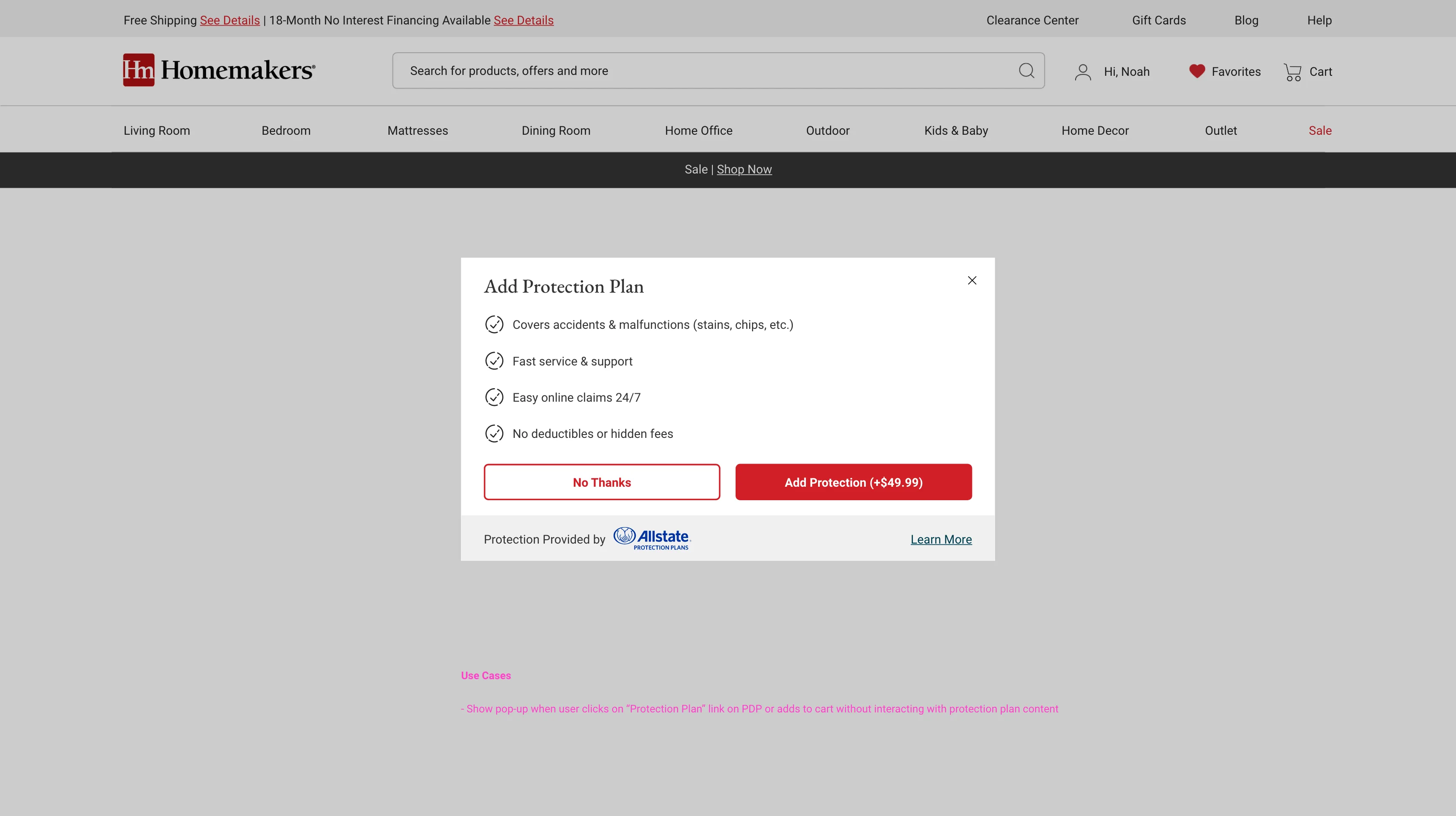
I cut the modal down to a few scannable benefits
Too much information, in interstitial modals, increases cognitive load and hesitation. I reduced excessive content down to a small set of key, scannable benefits to improve clarity and reduce friction during add-to-cart interactions.
FINAL DESIGN
Approved designs that were ready for development
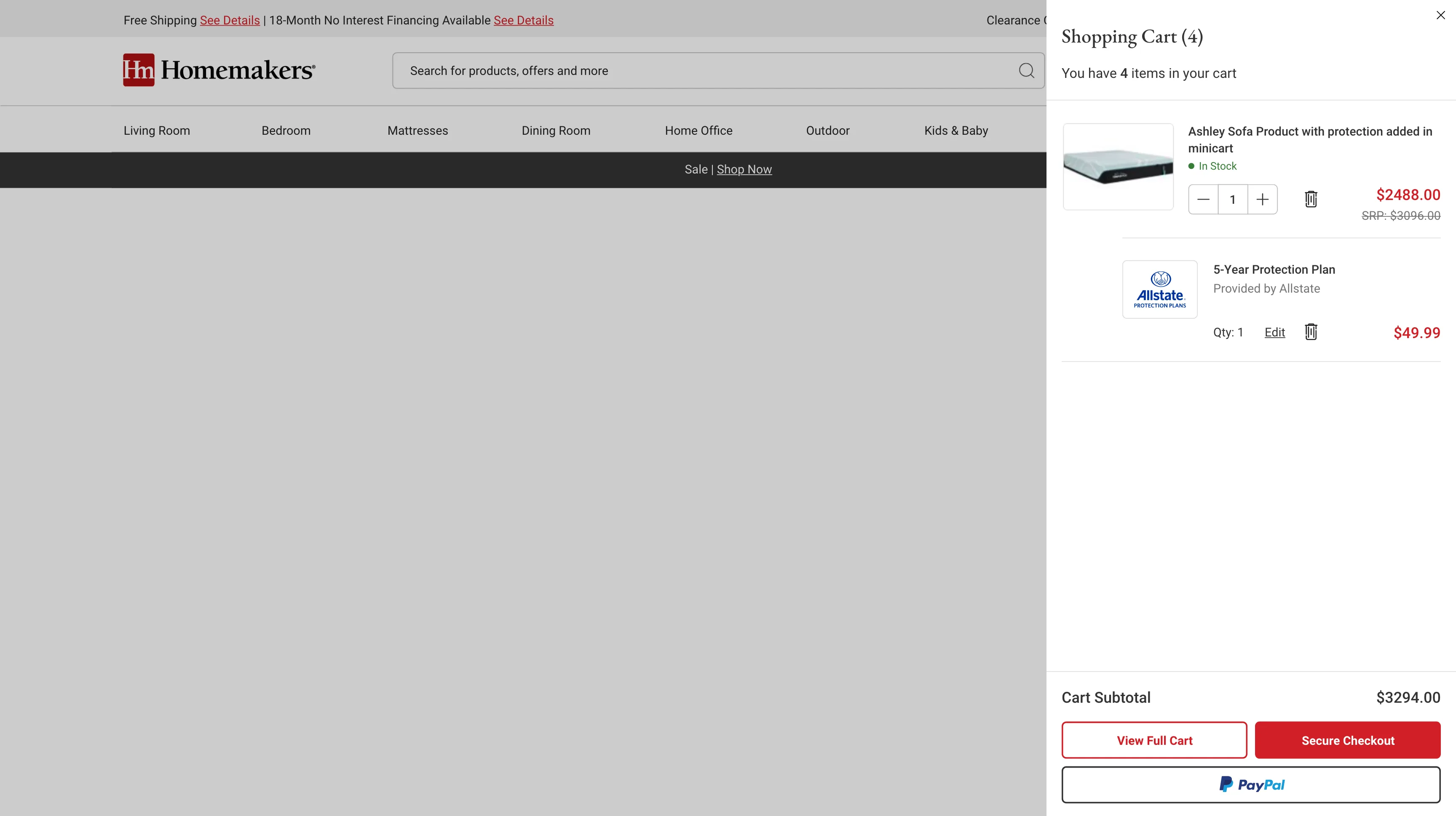
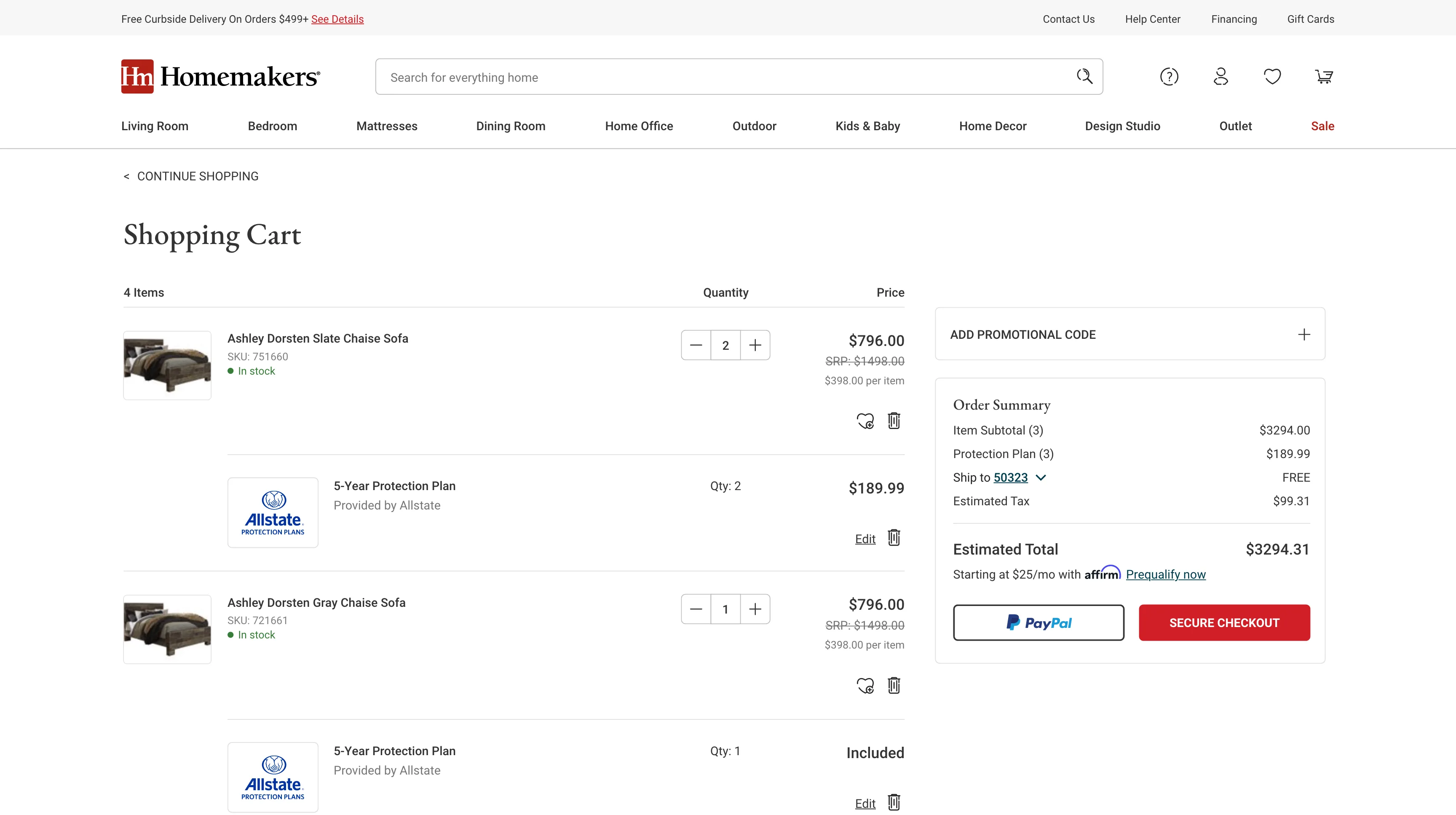
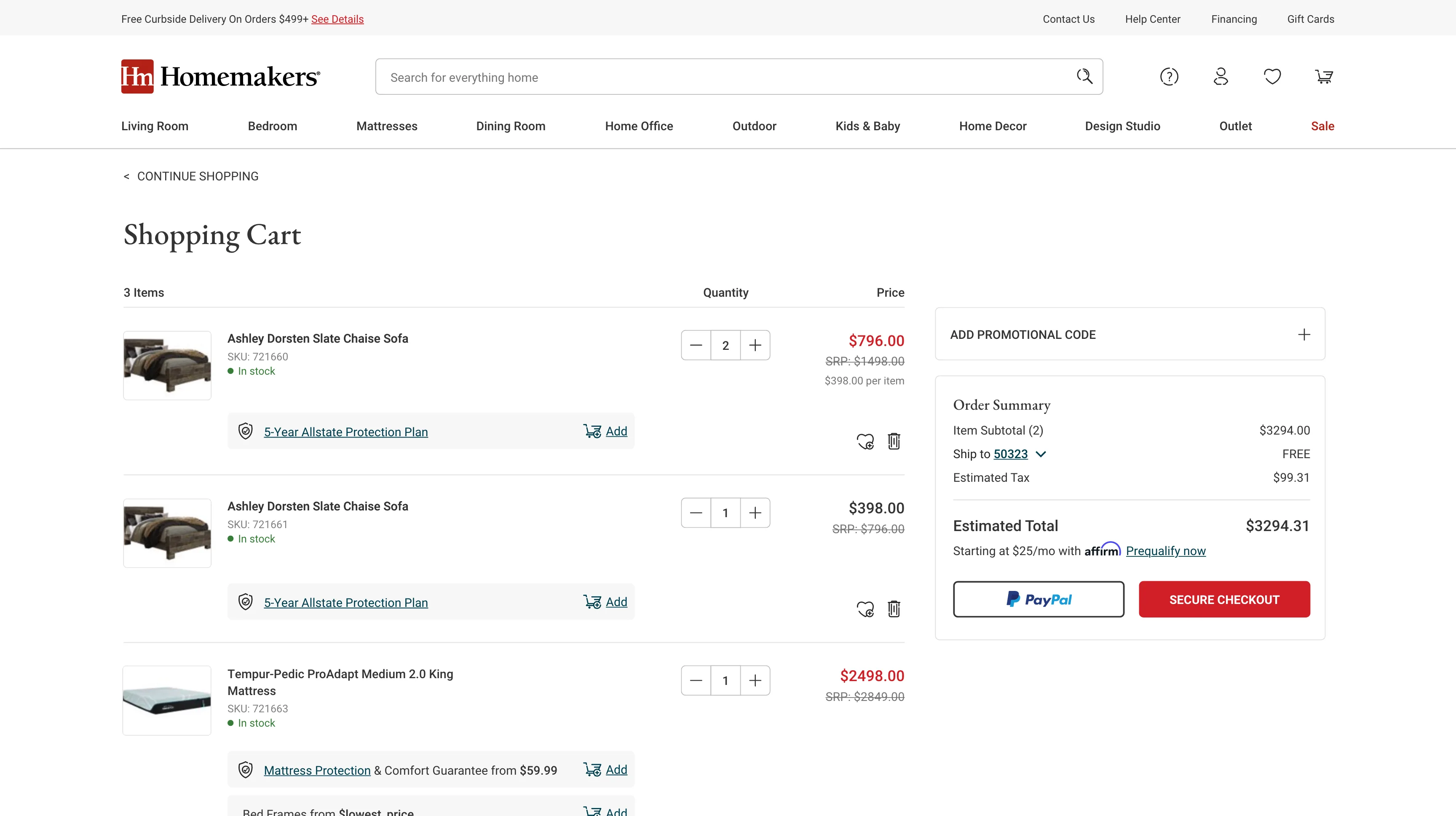
Treat unvalidated designs as hypotheses, not answers
Designing Without Outcome Visibility
Not every project you work on sees production due to any circumstances and constraints, so you don't always get to see the impact of your work.
Hypothesis Thinking
I became more intentional about framing my design decisions as hypotheses even when I didn't have the opportunity to validate them. If Allstate had released, I would have been every opportunity to A/B test and validate.
What I'd Do Differently
If I were to approach this project again, I would push to validate key assumptions earlier in the process through lightweight experiments or prototypes. Due to the tight deadlines, I had to base most of the designs off of my competitor analysis and previous plan data.
hello@noahheuton.com
LinkedIn
Los Angeles, CA 90028
© 2026 Noah Heuton