
Expanding the Catalog with Dropship
Overview
The challenge was to integrate Mirakl, a new third-party fulfillment model, into an experience built around Homemakers-owned inventory, while clearly communicating differences in availability, delivery, and fulfillment without introducing confusion, mistrust, or friction.
What I Did
I led the UX/UI design for integrating third-party dropship products into Homemakers’ existing ecommerce experience. I designed the experience to expand product discovery and revenue opportunities while maintaining a cohesive shopping journey across first-party and third-party products.
Timeline
January 2026 – June 2026
Role
UX/UI Designer
Contributions
End-to-End UX/UI
Systems Thinking
Collaborators
Analytics
Customer Service
IT
Operations
Functional Analyst
Developers
Stakeholders
IMPACT
Expected Outcomes
-
Reduce customer confusion around new fulfillment methods.
-
Increase revenue opportunities with expanded product catalog since we now offer more products for your home.
-
Higher engagement with expanded product catalog. Are customers engaging with new products?
RESEARCH & DISCOVERY
Gathering Insights
Multiple inputs were reviewed across product, operational, and customer-facing teams which includes quantitative data, qualitative data, and technical constraints.
- Existing ecommerce conversion data
- Product page engagement
- Delivery method selection behavior
- Internal concerns around fulfillment expectations
- Identification of friction points in mixed-cart experiences

KEY INSIGHT
Fulfillment Model Differentiation
Most users, especially returning, assume products on the site follow the same operational process unless explicitly told otherwise. Important delivery expecations should be surfaced contextually throughout the experience.
KEY INSIGHT
Early Transparency
Based on historical data and reviews, some users who abandoned reacted negatively when fulfillment limitations or high-priced shipping appeared too late in the journey. Set clear expectations early, but avoid introducing friction.
KEY INSIGHT
Mixed-Cart Complexity
When owned inventory and dropship products exist in a same cart, users need help understanding why deliveries may differ in timeline or arrival date, and why some items have restrictions.
HOW MIGHT WE
How might we integrate third-party marketplace products into the existing shopping experience while maintaining clarity, trust, and conversion confidence?

IDEATION & ITERATION
Using Insights to Drive Decisions
The discovery phase made it more clear that it wasn't just about expanding the catalog, it was also helping customers navigate complexity without increasing friction or loss of trust.
Rather than redesigning the shopping experience, the approach focused on strategically layering the new experience within the current structure.
Fulfillment Messaging on Product Pages
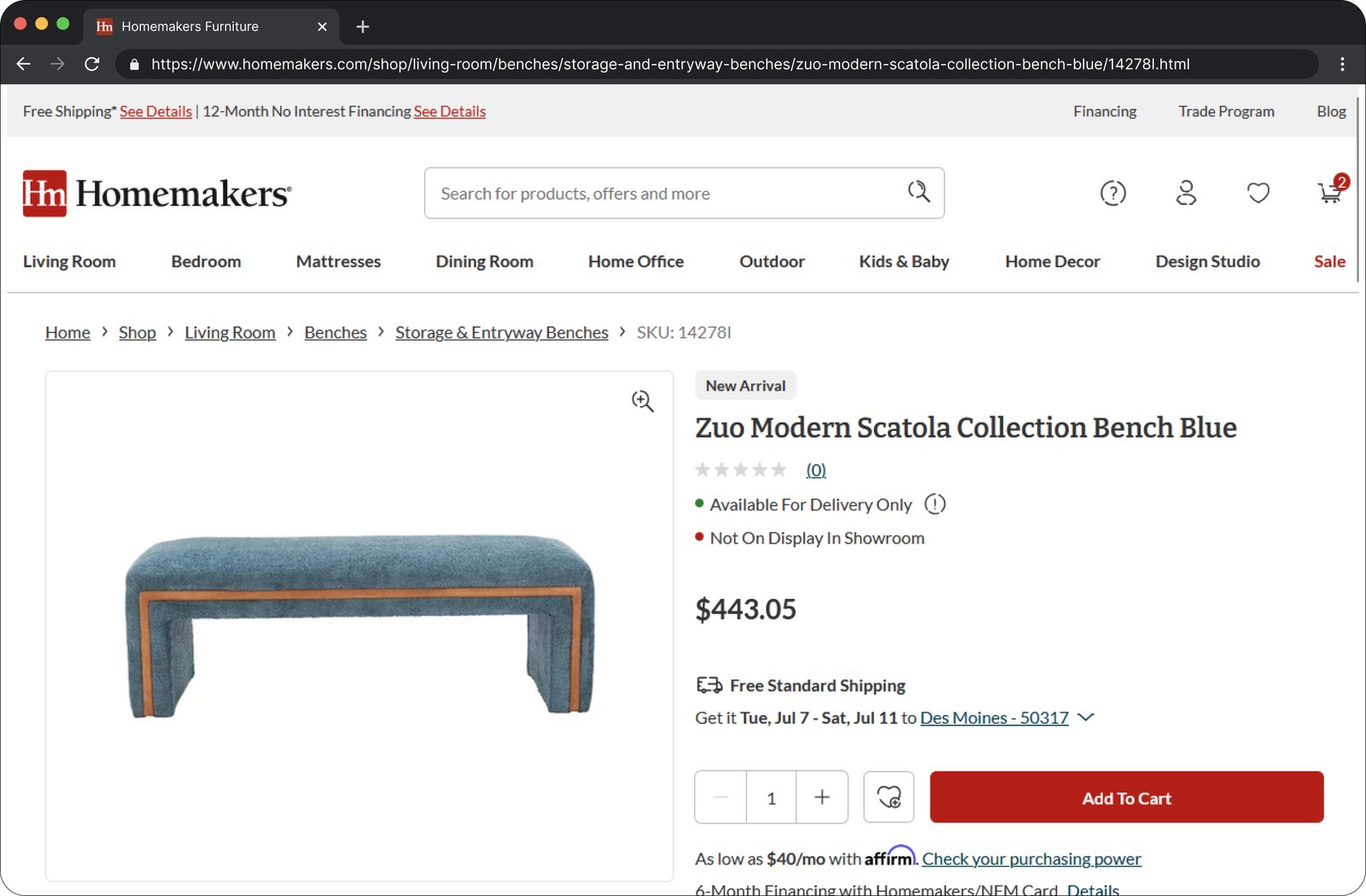
I changed availability information slightly and got feedback from customer service who talk to our customers everyday. With their feedback and insight for items that are in stock, it was generally understood that they are available for delivery only, so I updated "In Stock" to "Available For Delivery Only" while keeping "Out of Stock" functionality the same.
Expected Delivery Date Promises on Product Pages
To help alleviate uncertainty earlier in the shopping journey, expected delivery date messaging was introduced directly on the product pages of all 1P and 3P products which was placed near the Add to Cart button to support decision-making.
Cart Fulfillment Grouping
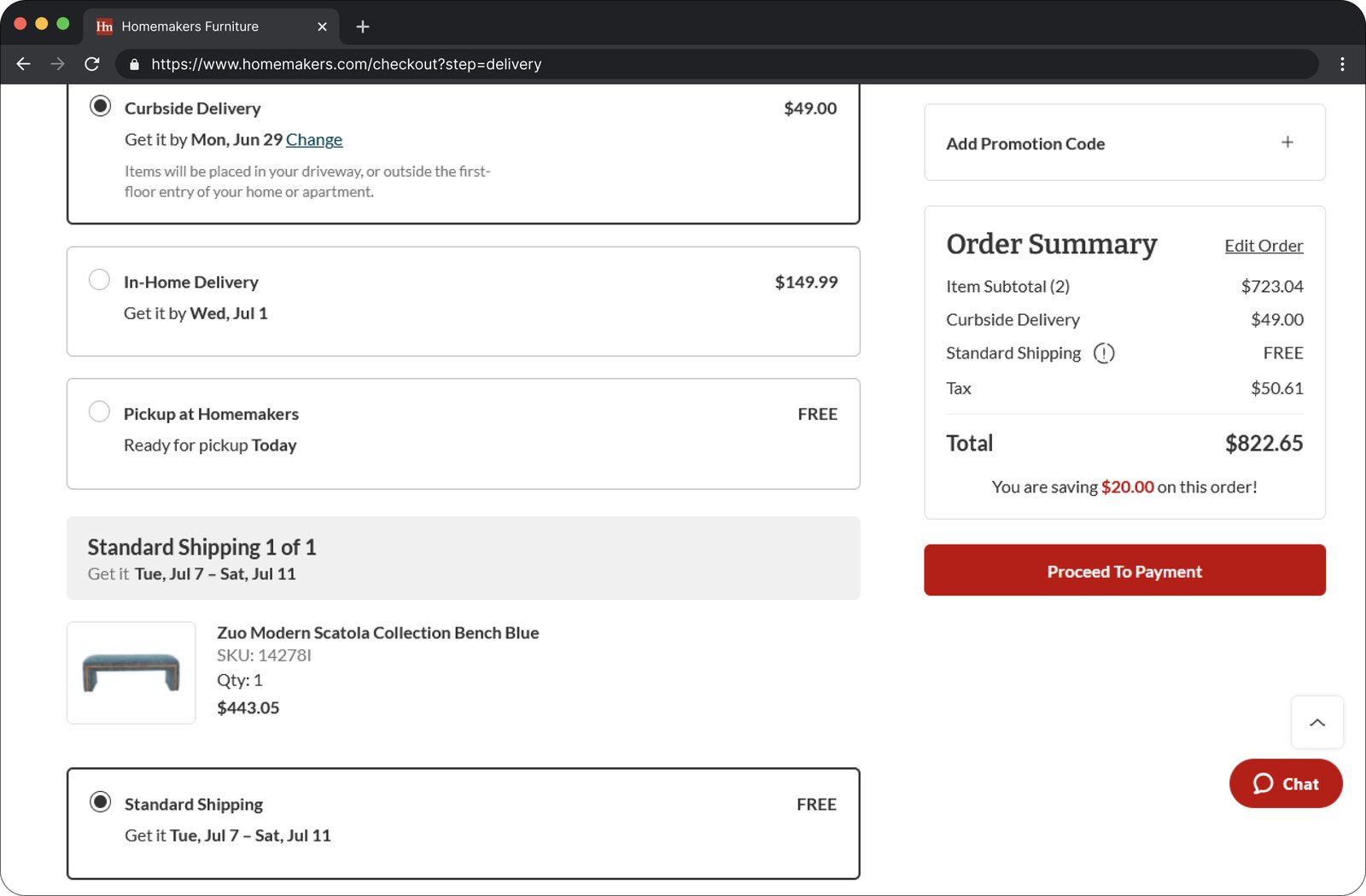
To reduce confusion in mixed carts, I decided products would best be grouped by fulfillment source, delivery timelines, and shipment type which is a strategy seen on competitor sites.
Additionally, we have 3P parcel items that were designed to always ship free and larger 3P items that follow our shipping pricing, so we intentionally aligned to familiar fulfillment methods with these items. Parcel items had free standard shipping and the large item deliveries were incorporated into our Curbside Delivery and Nationwide Shipping to help maintain consistency and reduce confusion.
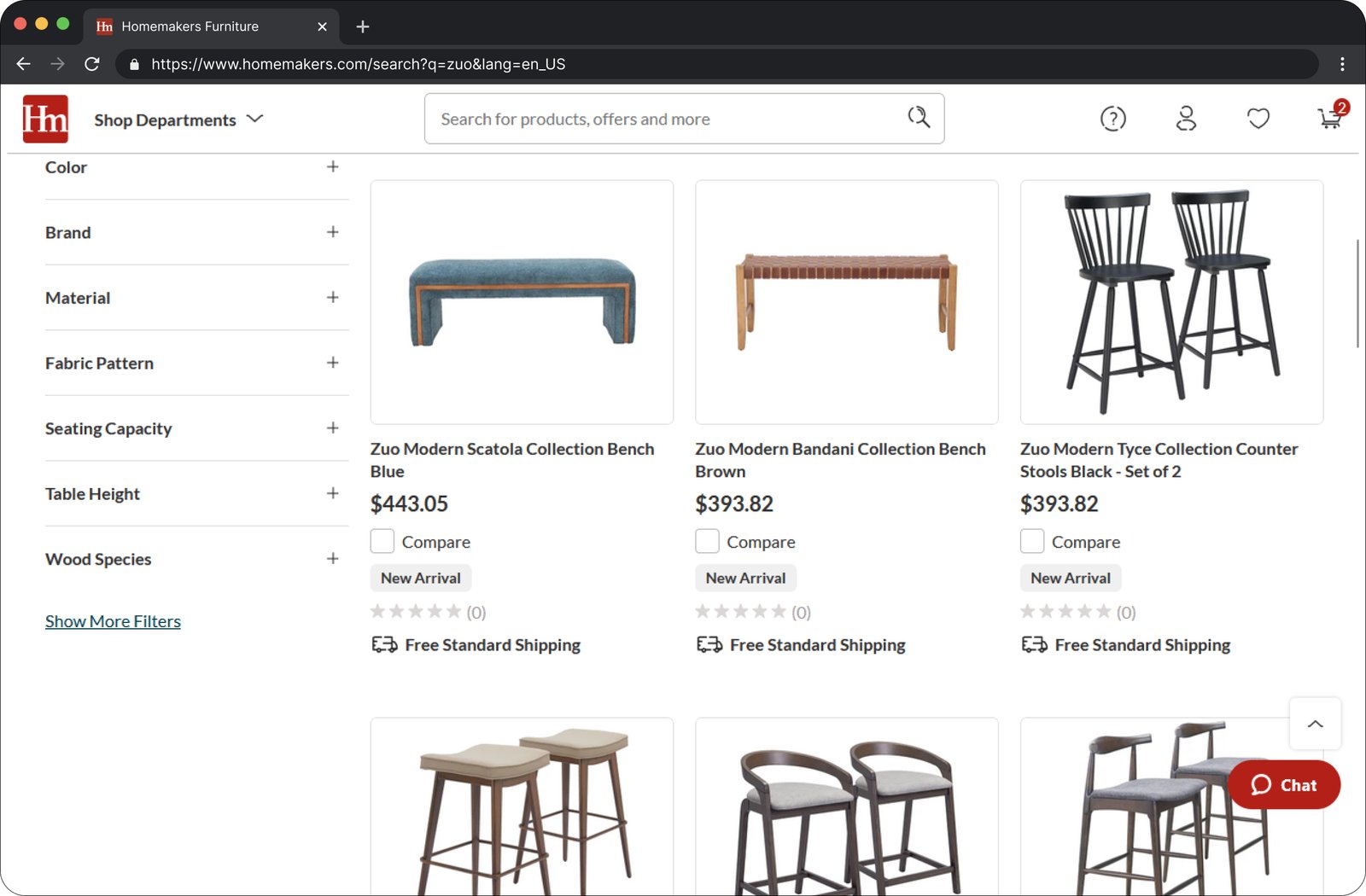
Consistent Marketplace Labeling
I introduced subtle and repeatable marketplace indicators across product listing pages, product detail pages, and cart experiences to help differentiate the products slightly.
USER TESTING
Testing the Solutions Internally
Operational Validation
Testing with our customer service, operations, and merchandising allowed me to gain valuable feedback on messaging and interpretation of delivery expectations with dropship to iterate on the designs before development.
Usability & Walkthroughs
Our ecommerce team had conducted stakeholder walkthroughs and completed QA validation across mixed-cart scenarios. Without this critical step, we would have missed edge cases involving parcel and large item combinations leading to a frustrating experience.
What I'd Do Next
Partnering with Customer Service
I will be in contact with customer service teams to validate whether customers clearly interpret fulfillment methods and labels. I am also hoping to understand and identify recurring friction patterns for post-launch support.
A/B Testing
With dropship products being added, we have new opportunities to run tests on labels and messaging, and we can further optimize the user experience and conversion rate.
hello@noahheuton.com
LinkedIn
Los Angeles, CA 90028
© 2026 Noah Heuton